

Common defence
What is common defence?
According to Article 85 of the Constitution of the Republic of Poland:
“It is the duty of every Polish citizen to defend the Homeland.
The nature of military service shall be specified by statute.
Any citizen whose religious convictions or moral principles do not allow him to perform military service may be obliged to perform substitute service in accordance with principles specified by statute.”
On this foundation a modern Common Defence adapted to Polish realities is being built — a model that is not a copy of the Finnish, Swiss or Ukrainian one, but a solution designed for Poland’s social, administrative and geographical structure. It draws on our experience, the potential of local communities and the tradition of volunteering, while consciously drawing on several proven foreign concepts. These inspirations will be described in the full, detailed description of the model.
At the heart of this approach is a prepared society. Citizens gain defence, rescue, technical and logistical skills that allow them to act both during military threats and in crisis situations. Like volunteer fire brigades supporting the State Fire Service, they can also support the uniformed services in peacetime while remaining ready for defence operations. Their participation is also essential for civil defence, which cannot function effectively without a real base of volunteers.
One of the strategic goals of the system is to achieve a level of public engagement comparable to Finland, where around 30% of adult citizens are prepared to defend the country. In Polish terms, this means a potential of 6–7 million trained people. Combining such a social resource with a modern army creates a level of deterrence that radically raises national security.
The model is supported by distributed defence infrastructure, local equipment depots and distributed strategic production carried out by the SME sector. These solutions are tailored to Polish geography, population density and economic capabilities, enabling hundreds of thousands of volunteers to take action within minutes of mobilisation.
The result is a Polish model of common defence — practical, modern and able to operate both in peacetime and under threat. Its strength lies in a prepared society, efficient local structures, competent civil defence and a professional army combined into one coherent system.
System assumptions – five pillars
1. Education
Education is the foundation for building Poland’s Common Defence and shaping informed citizens. National resilience is not only about military preparation — it covers a wide range of skills related to safety, resourcefulness and social responsibility. That is why education should start as early as possible: with simple topics in kindergarten, gradually developed in the following years.
From the 6th grade of primary school, fuller defence education can be introduced, in which young people learn responsibility for the state and gain practical skills: operating and the basics of building drones, the basics of shooting, responding in crisis situations, giving first aid and land navigation.
The subject Education for Safety should become one of the key elements in preparing young people. The model assumes it will be taught from the 6th grade until the end of secondary school, and then continued at universities through extended classes, including small-team leadership and the basics of crisis response.
Implementing these changes makes it possible to provide education and training to around 3 million pupils a year. Every year more than 300,000 young adults would leave secondary schools with basic defence training, and another million-plus students could develop these skills at universities. This means that, while maintaining the right quality of teaching, Poland could increase its pool of prepared reserves by more than 600,000 people every year — a realistic effect of a consistently implemented concept, not a description of the current state.
For the system to work at a high level, primary and secondary schools — of which there are around 18,000 — need a corresponding number of teachers prepared both theoretically and practically. This requirement applies only to general schooling.
Universities will require an additional staffing system, based both on current lecturers and on specialists with practical experience: retirees, veterans and defence instructors. These resources do not overlap with the needs of schools, but form a separate, complementary layer of the system.
It is also worth developing school and inter-school competitions related to defence. Competition strengthens motivation, raises the quality of learning and makes defence skills an attractive form of activity.
A well-organised defence education system will in time translate into greater interest in the uniformed services and in taking part in the National Defence System. It will also raise the general level of civic awareness and responsibility.
Regular adult education is also essential — so that society understands that its involvement is a key element in building deterrence. This message must be repeated until it becomes a natural part of the security culture.
Finland’s experience shows that building such awareness can take several years — there it took about seven. In Polish conditions, with systemic changes and the current international situation, a similar effect could be achieved even faster.
2. Training of civilians by a civilian organisation (PSSO)
The common defence model assumes that one of the key elements of building national resilience is mass training of citizens delivered by civilian organisations. PZSO, as the initiator of the concept, sets the direction, but is not meant to be the sole provider. That is why a new association is planned — the Polish Association for Defence Training (PSSO). It is to bring together several organisations with different specialisations, so as to cover a broad range of skills: from defensive shooting, through drones, communications and logistics, to tactical medicine and crisis response.
This approach is modelled on the Finnish MPK, which has trained society in a civilian model for years with impressive results. Poland, however, does not copy the Finnish system — it adapts it to its own social, geographical and demographic structure.
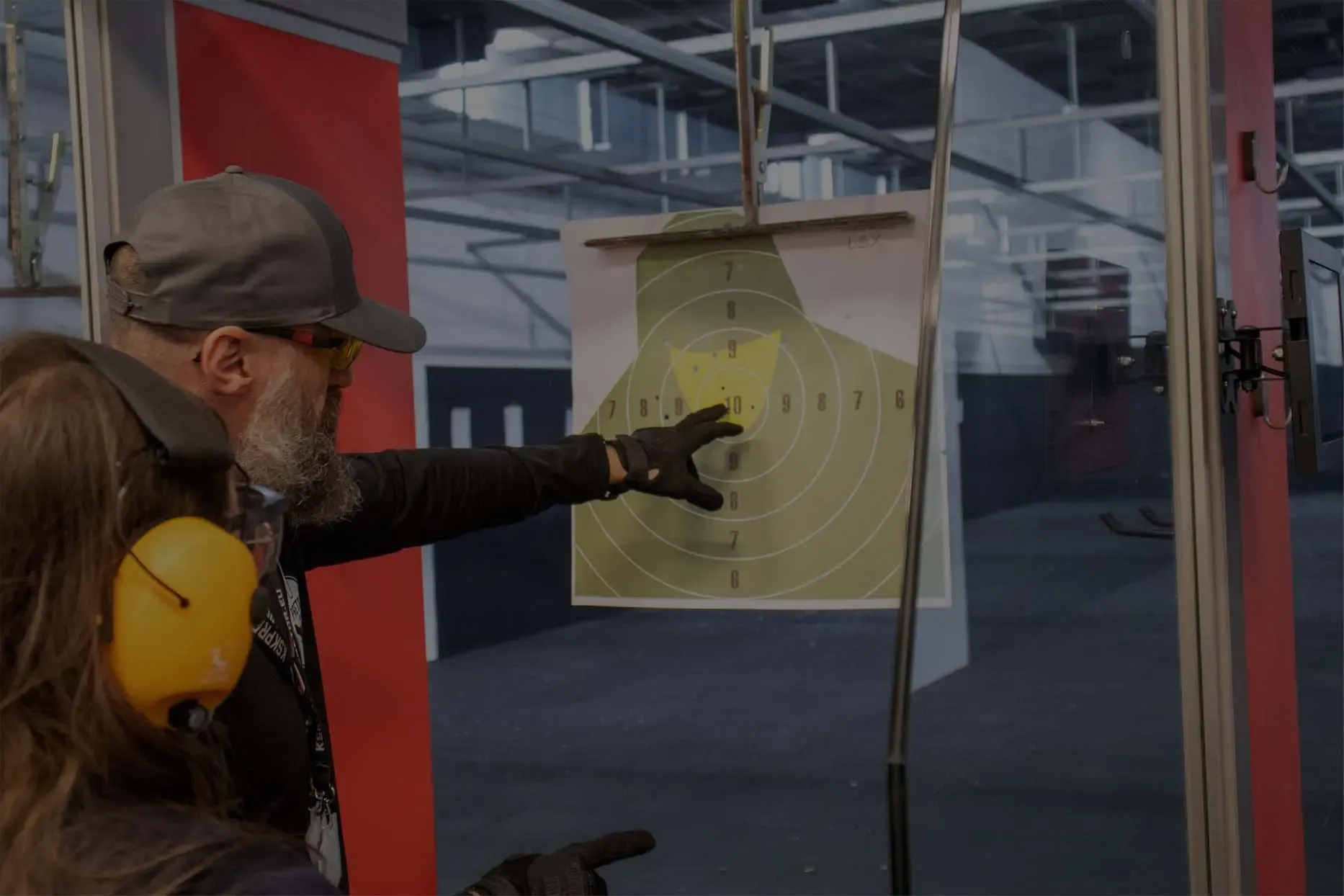
In the new structure, PZSO is responsible for defence-oriented shooting training. This training is completely different from that run by PZSS, which deals with sport shooting — focused on competition, sporting disciplines and results. Defensive shooting is meant to prepare citizens to act in real threats, not to compete in tournaments.
That is exactly why PZSO calls for the introduction of a new, pro-defence firearms licence, which would allow defensive shooting training to be conducted safely, in an orderly way and separately from the sport system.
A key resource we want to use is retirees, veterans and civilian enthusiasts — people with enormous experience who today often have no room to use their knowledge for the state. This is instructor potential that can change the scale and quality of training.
A fundamental principle of the model is that civilians train civilians. This not only builds society’s skills but also protects the army — because the military, burdened with mass training of the population, cannot maintain high combat value. The Armed Forces must focus on their own specialist training, while general training should be the domain of civilian structures.
The Finnish example shows the potential of such a model. Thanks to MPK, around 30% of the adult population has defence training. In a country of 5.6 million people, this makes it possible to mobilise around 280,000 soldiers and maintain around 870,000 trained reservists.
Transferring this approach to Polish conditions means an entirely different scale. If 30% of adult citizens in Poland take part in defence training, we are talking about 6–7 million trained people. Globally, this is a potential comparable to the largest countries — for example China, with a population of 1.3 billion, declares around 8 million reservists.
Such developed social resilience would give Poland an exceptionally strong position in Europe. We could become a state highly resilient to external threats — and even a leader supporting other European Union countries in building their defence capabilities.
3. National Defence System (KSO)
The National Defence System is the working name of a new state structure that would serve as the “organisational backbone” of common defence — similar to the National Firefighting and Rescue System (KSRG) in rescue services. Its task would be the central coordination of public involvement, cooperation with the uniformed services and implementation of the regional defence concept.
The idea is simple: volunteers should be able to support the uniformed services, just as volunteer fire brigades support the State Fire Service. One example is OSP Gdańsk, operating alongside the State Fire Service’s Specialist Search and Rescue Group, part of USAR Poland. There, civilians — search-and-rescue dog handlers — pass regular exams and, once qualified, are placed on the list of teams ready for deployment. The state knows who is prepared, in what role and when they can be activated.
This model works very well in rescue, so the natural question is: if volunteers can support the State Fire Service so effectively, why should they not also support the Police, the Border Guard or other services? In a model aiming for Finland’s level we have a potential of 6–7 million trained citizens. That is a huge force which — well organised — can be invaluable support for the state.
Based on KSO guidelines, PSSO would train volunteers for specific services or specialisations, so that everyone can develop in the areas that interest them and for which they have an aptitude. This is a way to build a high-quality resource: people who train in what they are passionate about usually achieve the best results.
A system built this way ensures one key thing — continuity of training. A volunteer who trains regularly, learns procedures and works in their group maintains a high level of readiness. This is incomparably more effective than structures activated only in war or crisis. Common Defence must work every day: as a living, active mechanism in which everyone knows their role, tasks and place in the line.
The Civil Defence Corps should adopt the same model, as it must largely rely on civilians who constantly train to respond to various crisis scenarios. Civil defence cannot be a “dormant structure” — it must be an active formation, ready to act at any moment.
Beyond day-to-day activities, KSO is also responsible for organising regional defence. In every district and municipality, strategic points of defence infrastructure must be designated and local operating procedures prepared. Regional defence training must take place regularly, so that everyone knows where to report, what to do and whom to work with. The effectiveness of defence depends on the preparation of local communities, not only on central structures.
Such a system sends a strong signal to the outside world: attacking Poland does not pay. An organised society, mass training, real readiness of regional defence and professional support for the uniformed services mean that any potential aggressor must reckon with unacceptable consequences. That is the essence of deterrence.
4. Distributed infrastructure on the Swiss model
Distributed infrastructure is one of the pillars of effective Common Defence. Switzerland has shown for years that spreading resources across many small, secured locations increases national resilience and minimises the risk of the system being paralysed. This model is worth adapting to Polish realities.
The basis is the creation of small depots of weapons, equipment and defence gear in public administration buildings, volunteer fire stations, police stations and other public facilities. This way, every volunteer can reach their designated depot within 15–20 minutes of home and collect the equipment assigned to their role. Volunteers can keep some equipment at home, but specialist or heavier equipment requires professional storage.
It is precisely this proximity of resources that makes it possible to act quickly, before a potential aggressor can seize the initiative. Dispersal also prevents the infrastructure from being destroyed with a single strike — the system remains functional even with local losses.
Distributed infrastructure is directly linked to the concept of regional defence. Once KSO, local governments and PSSO have drawn up local action plans, the terrain and defensive positions at key locations need to be prepared. The aim is for the terrain to work in favour of the defender, not the adversary.
The example is simple: road layouts can be prepared so that an attacking column is forced into a bottleneck where defenders have prepared infrastructure, positions, obstacles and blocking systems in advance. Such solutions not only increase the chances of defence — they are a deterrent in themselves, because the aggressor sees that the terrain is a trap, not a motorway to the target.
Equally important is the preparation of training infrastructure. If eventually as many as 6–7 million citizens are to be involved in the defence system, Poland needs far more training grounds, shooting ranges, obstacle courses and training areas. Without expanding this infrastructure, regular exercises on the right scale cannot be held. KSO, working with local governments and PSSO, should have a mandate to create such a network of facilities — local and regional, public and dedicated.
Distributed infrastructure therefore works on two levels:
it provides rapid access to equipment in times of threat and enables continuous training, without which effective common defence is out of the question.
It is one of the most important elements that genuinely strengthen deterrence — because it shows that Poland is a country that is hard to attack and even harder to break.
5. Distributed production of strategic products using SMEs
The pandemic showed what a lack of domestic production in key areas leads to — the state loses the ability to meet basic needs. The war in Ukraine revealed a second, even more important lesson: only distributed production guarantees continuity in times of threat. If factories are spread across many locations and owned by many entities, the adversary cannot stop the whole system with a single strike.
That is why it is so important to create a permanent, peacetime system for producing strategic products, based on Polish small and medium-sized enterprises. Such a system can operate commercially day to day and, at hour “W”, switch smoothly to full defence production.
If some companies export their products, exports can be halted immediately when needed, and all production capacity redirected to Poland’s needs — guaranteeing continuity of supply.
For this model to really start working, it first has to be launched. The state’s role is to support the organisation of the network, create the legal conditions, provide financial instruments and — very importantly — help build exports. Growing companies increase their sales, thereby raising Poland’s GDP and building their own capital. That capital stays in Poland instead of strengthening foreign corporations.
That is why a distributed production system brings many benefits:
- we develop Polish companies,
- we strengthen innovation,
- we increase the security of supply chains,
- we build economic resilience,
- we raise Poland’s position in Europe and the world.
- As a result, Poland could become a major supplier of strategic components and products for the whole of Europe — especially if the system operates consistently and in the long term.